Payday Loans in Canada: Rules, Costs, and Your Rights
Serving all of Canada
Payday loans in Canada are regulated province by province: fees are capped between $14 and $17 per $100 borrowed, no single loan can exceed $1500, and every borrower has a legal right to cancel within the cooling-off period. This page explains the rules that protect you in each province, what a payday loan really costs, and how to apply online even with bad credit.
- Free to apply, checking your options does not hurt your credit score
- Licensed Canadian lenders only, provincial fee caps enforced
- E-transfer funding as soon as today, bad credit welcome
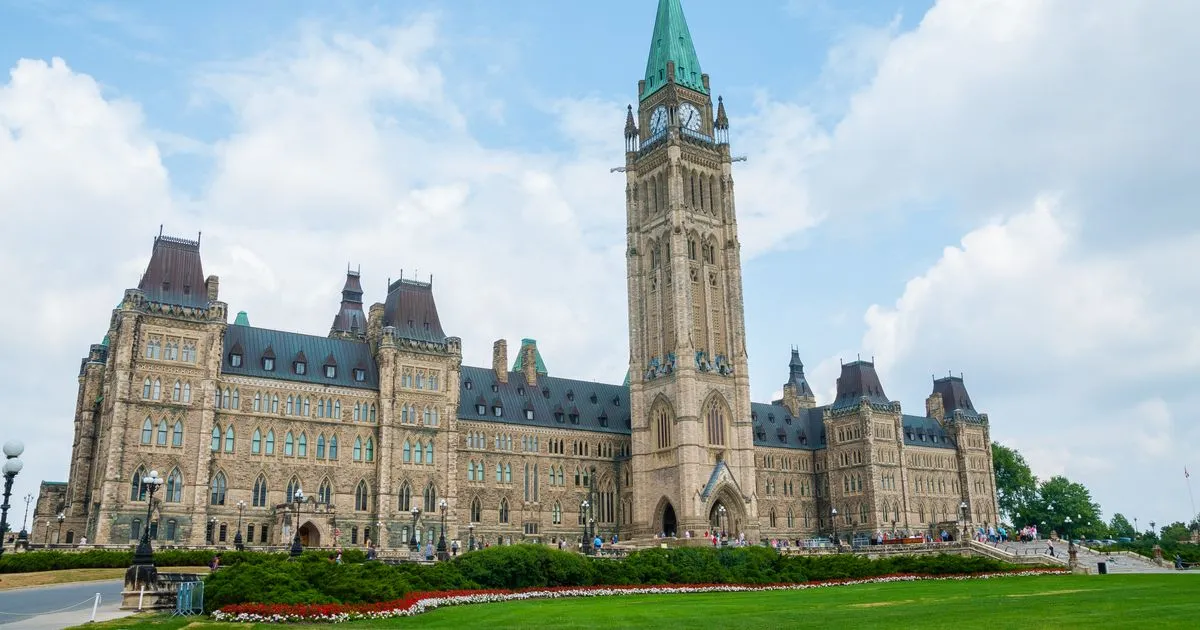
Who Regulates Payday Loans in Canada?
Payday loans in Canada are regulated twice over. The federal Criminal Code caps most consumer lending at 35% APR and carves out an exemption for payday loans only when a province has its own regulatory regime and the loan is $1500 or less for 62 days or less. Every province has taken up that invitation, which is why the payday loan you see in Ontario looks different from the one in Saskatchewan.
Provincial regulators license lenders, set the maximum fee per $100 borrowed, ban rollovers, and spell out borrower rights like cooling-off periods. If a lender is not licensed in your province, the protections do not apply, which is the single best reason to borrow only from licensed Canadian lenders.
The result is a market that is expensive but predictable: the price of a payday loan is set by law where you live, not by negotiation or by your credit score.
Payday Loan Acts and Regulations by Province
There is no single payday loan act in Canada. The federal hook is section 347.1 of the Criminal Code, which lets a province regulate payday loans in place of the 35% ceiling, and each province then wrote its own statute. These are the laws behind the fee caps and the borrower rights on this page:
| Province | Governing law |
|---|---|
| Ontario | Payday Loans Act, 2008 |
| British Columbia | Business Practices and Consumer Protection Act, Part 6.1, with the Payday Loans Regulation |
| Alberta | Consumer Protection Act with the Payday Loans Regulation |
| Saskatchewan | Payday Loans Act |
| Manitoba | Consumer Protection Act, Part XVIII (Payday Loans) |
| Nova Scotia | Consumer Protection Act, payday loan provisions |
| New Brunswick | Cost of Credit Disclosure and Payday Loans Act |
| Newfoundland and Labrador | Consumer Protection and Business Practices Act, payday loan provisions |
| Prince Edward Island | Payday Loans Act |
The Ontario payday loan laws are the ones most searched, and they set the pattern the others follow: a licence for every lender and location, a $15 per $100 cap, a $1500 limit, a two business day cancellation right, a ban on rollovers and concurrent loans, and an extended payment plan for anyone taking a third loan within 63 days. BC's Payday Loans Regulation under its consumer protection act works the same way at the same cap. Each act also names the regulator that takes complaints: Ontario's Ministry of Public and Business Service Delivery, Consumer Protection BC, Service Alberta, and their counterparts elsewhere.
Payday Loan Fee Caps by Province: How Interest and Fees Are Capped
The table below is the heart of payday lending in Canada: the maximum a licensed lender can charge per $100 borrowed in each province, as of 2026.
| Province / Territory | Max fee per $100 | Max loan |
|---|---|---|
| Ontario | $15 | $1500 |
| British Columbia | $15 | $1500 |
| Alberta | $15 | $1500 |
| Manitoba | $17 | $1500 |
| Saskatchewan | $17 | $1500 |
| Nova Scotia | $15 | $1500 |
| New Brunswick | $15 | $1500 |
| Newfoundland and Labrador | $14 | $1500 |
| Prince Edward Island | $15 | $1500 |
| Quebec | 35% APR cap, no payday model | Installment only |
| Territories | Federal 35% APR rules | Online lenders |
Newfoundland and Labrador is the cheapest province to borrow in at $14 per $100, while Manitoba and Saskatchewan sit at the top at $17. The differences sound small but compound quickly: on a $1000 loan the gap between $14 and $17 is $30 in fees on a single two-week term.
Your Rights as a Payday Borrower
Provincial payday rules give Canadian borrowers a set of rights that many people never hear about. Knowing them changes how you borrow.
- Cooling-off period. You can cancel a payday loan without penalty, usually until the end of the next business day. Return the principal and you owe nothing, no questions asked.
- No rollovers. A lender cannot roll your unpaid balance into a new loan with new fees, and cannot lend you a second payday loan to pay off the first.
- Full cost disclosure. The agreement must show the fee, the total you repay, and the due date in plain dollars before you sign.
- Extended payment plans. In several provinces, repeat borrowers are entitled to repay over multiple pay periods at no extra charge.
- Capped default penalties. Provinces cap NSF charges and default interest, so a late loan cannot snowball without limit.
If a lender breaks these rules, your provincial consumer protection office can order refunds and pull licences. Keep a copy of every agreement.
What Does a Payday Loan Really Cost?
The honest arithmetic: payday loans are the most expensive regulated borrowing in Canada. The fee looks small because the term is short.
| Amount borrowed | $300 |
|---|---|
| Fee at $15 per $100 | $45 |
| Total to repay in 14 days | $345 |
| Equivalent APR | about 391% |
Paid on time, the fee is the whole cost. The danger is repeat borrowing: taking a new loan every payday turns $45 into $90, then $135, for the same $300 of breathing room. That is why the rules ban rollovers and why this page covers the installment alternative below.

How to Apply for a Payday Loan Online
Applying takes about 5 minutes and works the same way with nearly every licensed Canadian lender.
- Apply online. Complete the short form above with your details, employment income, and the amount you need. Free, no obligation.
- Get matched and verified. Lenders that fit your profile confirm your income, usually through instant bank verification: a read-only check that takes about 60 seconds and never touches your credit score.
- Sign and get funded. Review the agreement, check the disclosed cost against the caps above, sign electronically, and funds arrive by Interac e-transfer, often within the hour.
Bad Credit and Payday Loan Approval
Payday lenders in Canada approve on income, not credit history. Steady pay from a full-time or part-time job deposited into an active chequing account matters more than your score, which is why applicants with scores in the 400s and 500s are approved every day.
Typical requirements: age of majority in your province (18 or 19), Canadian residency, a chequing account open around 3 months or more, steady employment income of roughly $1200 to $1800 net per month, and working contact details. Past collections or a discharged bankruptcy rarely block approval on their own.
Many lenders run no hard credit check at all, verifying deposits instead. Where a check happens it is usually a soft one, invisible to other lenders and harmless to your score.
Payday Loan Eligibility in Canada: The Checklist
Payday loan eligibility in Canada comes down to four things, and none of them is a credit score: you are the age of majority in your province, you live in Canada with an active chequing account, you have steady employment income deposited to that account, and you have a working phone and email. Meet those and a licensed lender can assess you; provincial rules then size the loan to a share of your net pay, so eligibility for a loan and eligibility for the full $1500 are different questions.
How Much Can You Borrow?
The legal ceiling is $1500 per payday loan everywhere in regulated Canada, but your practical ceiling is set by income: provinces limit the loan to a share of your net pay, commonly 30% to 50% of the paycheque it comes out of. First loans usually land between $100 and $500, with higher amounts available after on-time repayment.
Needing more than $1500 is the clearest signal that a payday loan is the wrong product. A personal installment loan of $500 to $10000 repaid over months costs far less per dollar borrowed, and the application above matches you with both kinds of lender at once.
Why Quebec Has No Payday Loans
Quebec chose a different path: instead of a payday carve-out, it holds all consumer lending to an effective 35% APR ceiling. At that rate the two-week payday fee model cannot operate, so traditional payday storefronts do not exist in the province.
Quebec borrowers are not shut out of short-term credit. Licensed lenders serve the province with small installment loans at or under the 35% cap, repaid over a few months rather than from a single paycheque. Apply through the same form and you are matched with lenders licensed for Quebec automatically.
Payday Lending in the Territories
Yukon, the Northwest Territories, and Nunavut have no territorial payday regime, so the federal Criminal Code applies directly: lending above 35% APR is a criminal offence, full stop. Online lenders serve the territories under that ceiling with short-term installment products, and northern borrowers apply exactly the same way as everyone else.
Payday Loan Repayment Plans: What If You Cannot Repay on Time?
Do not wait for the due date to pass. Canadian rules give you more room than most borrowers realize.
- Call the lender before the loan is due. Many will reschedule a payment date once at no charge, especially for a first loan.
- Ask about an extended payment plan. In provinces including Ontario, Alberta, and BC, repeat borrowers are entitled to one: the balance splits over two or three pay periods with no new fees.
- Never borrow a second payday loan to cover the first. It is illegal for a lender to offer this, and it is the entrance to the debt cycle.
- Replace the balance with an installment loan if repayment from one paycheque was never realistic. One predictable monthly payment ends the two-week fee clock.
If debt has outgrown your income, a non-profit credit counsellor can negotiate with lenders at no cost. The Financial Consumer Agency of Canada publishes free guidance on payday loans and debt help.
How to Confirm a Lender Is Licensed
Every regulated province keeps a public registry of licensed payday lenders, and legitimate lenders display their licence number on their site and in the agreement. Before signing with any lender you found yourself, check three things:
- The licence. Search the lender's name in your provincial consumer protection registry. No licence means no legal protections.
- The cost math. The disclosed fee cannot exceed your province's cap from the table above. A higher number is either a scam or an unlicensed lender.
- No upfront payment. A real Canadian lender never asks for a fee, gift card, or crypto transfer before funding. That request is the signature move of loan scams.
Applying through the form on this page skips that legwork, since it matches only licensed Canadian lenders operating under provincial rules.
The Installment Loan Alternative
For anything beyond a genuine two-week gap, an installment loan is usually the cheaper and calmer tool. The comparison in plain terms:
| Payday loan | Installment loan | |
|---|---|---|
| Amount | $100 to $1500 | $500 to $10000 |
| Repayment | One lump sum next payday | Fixed payments over 3 to 60 months |
| Cost | $14 to $17 per $100 | 18% to 35% APR |
| Credit reporting | Usually none | Many lenders report on-time payments |
| Best for | A small one-time shortfall | Larger amounts and rebuilding credit |
Both are open to bad-credit applicants, and one application through the form above shows you offers from each side so the numbers can make the decision.
Available Everywhere in Canada
Online payday and installment lending reaches every city, town, and rural route in Canada, because the whole process runs on an online application and Interac e-transfer. Borrowers in Toronto, Vancouver, Calgary, Edmonton, Winnipeg, Halifax, Moncton, St. John's, and Charlottetown all apply the same way; the only thing your location changes is which provincial fee cap protects you and which licensed lenders you match with.
What Canadians Actually Use Payday Loans For
Regulators track this, and the pattern is consistent across provinces: the most common uses are urgent one-time costs. Car repairs lead the list, because in most of Canada a working vehicle is what protects the income that repays the loan. Rent and utility catch-ups, dental emergencies, prescription costs, and replacing an essential appliance follow close behind.
The purpose matters more than lenders let on, because it predicts whether the loan helps or hurts. A one-time expense with a clear end, like a repair bill, fits the payday structure: borrow once, repay once, done. A repeating shortfall, like rent that outruns income every month, does not fit, because the fee repeats along with the gap. Before borrowing, ask which kind of problem you are funding. If it is the repeating kind, the extended payment plans, counselling routes, and installment options covered above will serve you better than any two-week loan, and a licensed lender would rather you knew that now than at renewal time.
Lenders do not restrict how you spend the money, so the discipline is yours: the strongest payday borrowers treat the loan like the repair invoice it usually covers, a specific number with a specific end date.
Escaping the Repeat Borrowing Cycle
The payday cycle starts quietly: repaying $345 from one paycheque leaves that paycheque short, which makes a new loan two weeks later feel necessary. Provincial rules attack the cycle from one side, banning rollovers and back-to-back loans, but the exit still has to be built by the borrower.
What works, in order of impact: replace the balance with a small installment loan, so repayment spreads across months and the two-week fee clock stops; invoke your right to an extended payment plan where your province provides one, splitting the balance across pay periods at no extra cost; and shrink the next borrow rather than repeating it, since a $200 loan costs $30 at $15 per $100 while a $500 habit costs $75 every cycle. If the numbers no longer close at all, a non-profit credit counsellor can negotiate directly with lenders for free, and getting that help early is the cheapest decision in consumer debt.
One structural advantage Canadian borrowers have: because rollovers are illegal here, the cycle is a series of separate decisions rather than one compounding balance. Each payday is a real exit ramp, and the installment option above is usually the one that gets taken.
Can a Payday Lender Garnish Wages or Take You to Court?
Knowing your rights when a loan goes wrong matters as much as the fee cap. A payday lender cannot garnish wages on its own authority anywhere in Canada: garnishment requires a court judgment first, and several provinces add further limits on how much of a paycheque can ever be taken. Court itself is possible but uncommon for payday amounts, because repayment is normally collected straight from your account on the agreed date. What you will see first is collection calls, and provincial rules limit how and when collectors may contact you. If a lender threatens immediate garnishment without a judgment, that threat itself breaks the rules in most provinces and belongs in a complaint to your provincial regulator.
How to Get Out of Payday Loan Debt
The exit is structural, not heroic. Stop renewing: every rollover or same day re-borrow pays the full fee again for the same money. Repay the loan on its date, then cover the gap it leaves with cheaper structure instead of a second loan: a small installment loan at or under the 35% cap spreads the repayment over months, and nonprofit credit counsellors negotiate payday debt every day at no charge. Two or more concurrent payday loans is the honest signal to stop borrowing at payday pricing entirely and consolidate.
Payday Loans in Canada: FAQ
Are payday loans legal in Canada?
Yes, in every province, under provincial licensing and fee caps with a federal Criminal Code framework behind them. The exemption from the 35% APR ceiling applies only to regulated loans of $1500 or less.
How much can a payday loan cost?
$14 to $17 per $100 borrowed depending on your province. A $300 loan at $15 per $100 costs $45 for 14 days, roughly 391% as an APR, which is why payday loans suit only short one-time gaps.
What is the maximum payday loan?
$1500 everywhere in regulated Canada, with terms up to 62 days, and your income sets the practical limit below that. Larger needs fit installment loans of $500 to $10000.
Can I cancel after signing?
Yes. The cooling-off period, usually to the end of the next business day, lets you return the principal and cancel at no cost. It must be stated in your agreement.
Can I get approved with bad credit?
Yes. Approval rests on steady employment income and an active bank account. Many lenders check no credit at all, and soft checks never affect your score.
Does Quebec have payday loans?
No. Quebec's 35% APR ceiling rules out the payday model, so licensed lenders offer small installment loans there instead. The same application covers Quebec.
What if I cannot repay on time?
Rollovers are banned, several provinces guarantee extended payment plans, and lenders will often reschedule once if you call before the due date. Never take a second payday loan to cover the first.
How fast is funding?
Approval usually takes minutes, and Interac e-transfer funding lands within an hour or two of signing. Doing the 60-second bank verification right away is the biggest time saver.
Is there a payday loan act in Canada?
Not a single federal one. Section 347.1 of the Criminal Code lets provinces regulate payday loans, and each province passed its own law, such as Ontario's Payday Loans Act, 2008 and Saskatchewan's Payday Loans Act.
Who is eligible for a payday loan in Canada?
Anyone of the age of majority in their province with Canadian residency, an active chequing account, steady employment income deposited to it, and working contact details. Credit score is not a requirement.
More Canadian Payday Loans Guides
These supporting guides go deeper on the questions readers ask most, each written to the same rules as this page.
- Guaranteed Payday Loans Canada: $100 to $1500 Approved on Income 2026
- No Refusal Payday Loans Canada: How to Get Approved the First Time
- Payday Loans on Disability Canada: CPP-D, AISH, ODSP, PWD Income 2026
- Child Tax Payday Loans Canada: Borrow on Your CCB Deposit Date
- EI Payday Loans Canada: Loans on Employment Insurance Deposits 2026
- Payday Loans No Documents Canada: Paperless Approval by E-Transfer
- Payday Loans for Unemployed Canada: EI, Benefits and Other Income
- Payday Loans No Bank Verification Canada: Document Route Explained
- 100% Approval Payday Loans Canada: What It Means and How to Qualify